Cow Neck is the Hamptons golf course built to stay almost unseen cover
Back to The Perfect Lie

Cow Neck is the Hamptons golf course built to stay almost unseen

Golf Digest’s June 2026 reporting on a private nine-hole course near Shinnecock Hills also reveals a conservation story that matters as much as the fairways.

Share this article

FacebookLinkedInXEmail
  • A June 17, 2026 Golf Digest video and companion report took viewers to Cow Neck, a nearly unknown nine-hole course in Southampton, N.Y. The course sits less than two miles from Shinnecock Hills, the setting for the 2026 U.S. Open, but it operates on a different premise: there is no membership, no public tee sheet and almost no public explanation of who designed it or how often it is played.

  • YouTube

    A Billionaire’s Secret Golf Course in The Hamptons | Strange Lies | Golf Digest

    Read source
  • The mystery is part of the attraction, but the more durable story is the land around the course. Golf Digest reported that Louis Bacon bought the roughly 540-acre Cow Neck tract in 1998 after outbidding Donald Trump. In 2000, Bacon donated a conservation easement to the Peconic Land Trust. The trust’s spring 2001 newsletter described the gift as the largest conservation donation in its history and said the easement would protect wetlands, farmland and Peconic Bay habitat from major development.

  • That arrangement did not make the property a public preserve. The Peconic Land Trust newsletter said the easement allowed no more than five new single-family homes. Golf Digest reported that Bacon also retained rights connected to an equestrian, farm and game-management zone, including a polo field, equestrian facilities and up to nine golf holes. The course is therefore best understood as one permitted use inside a much larger protected landscape, rather than as a conventional resort development.

  • Make your call with Beat Chuck

    Check the challenge board for the latest open games.

    All Beat Chuck games →
    Golf Chuck
  • Construction began in 2015, according to Golf Digest. Using satellite imagery and on-the-ground reporting, the magazine identified five apparent fairways, 10 greens—one likely a practice green—water and 23 bunkers. The report described the conditioning as good, though short of the neighboring elite clubs, and said the identity of the designer remains unknown. A representative for the owner declined to answer questions about the designer, use, staffing, cost or the owner’s playing habits.

    That silence leaves the course with an unusual identity. It is not a hidden public gem waiting for tee times, and it is not a transparent private club that publishes its history and architecture. It is a private course whose value appears tied to controlled access and the ability to keep the surrounding property quiet. The absence of a membership model is itself a defining fact.

    The timing of the Golf Digest report adds context without changing the underlying story. Shinnecock Hills was preparing to host the U.S. Open, putting the Hamptons’ golf geography under a global spotlight. Cow Neck sits close to that famous tournament ground while remaining largely outside the public golf economy. The contrast is what makes the video useful: one course is a major championship stage, while the other is a private landscape that the public can study mainly through reporting and overhead imagery.
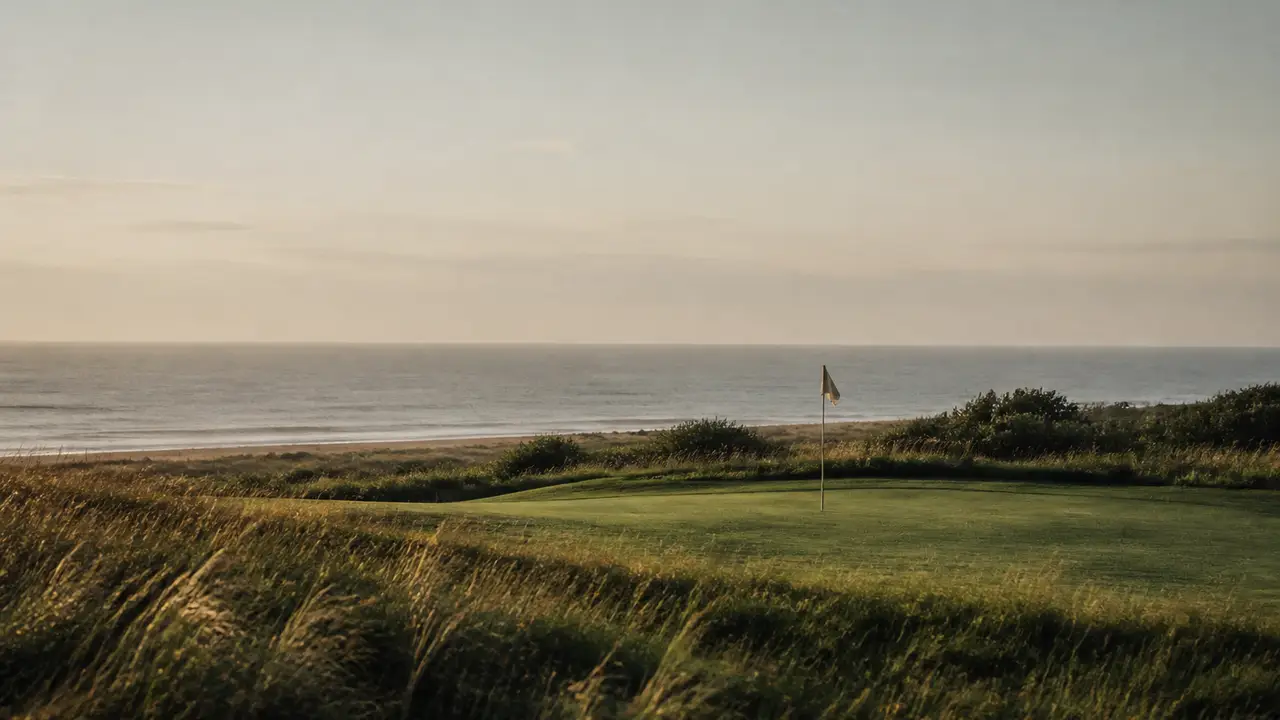

  • For golfers, the lesson is less about trying to gain access than about seeing how land, wealth and golf design can overlap. Cow Neck’s nine holes are a striking detail, but the conservation easement explains why the property still looks different from the built-out resort that might otherwise have occupied 540 acres. The course remains secretive by design. The public record is clearer about the land’s protection than about the golf itself.