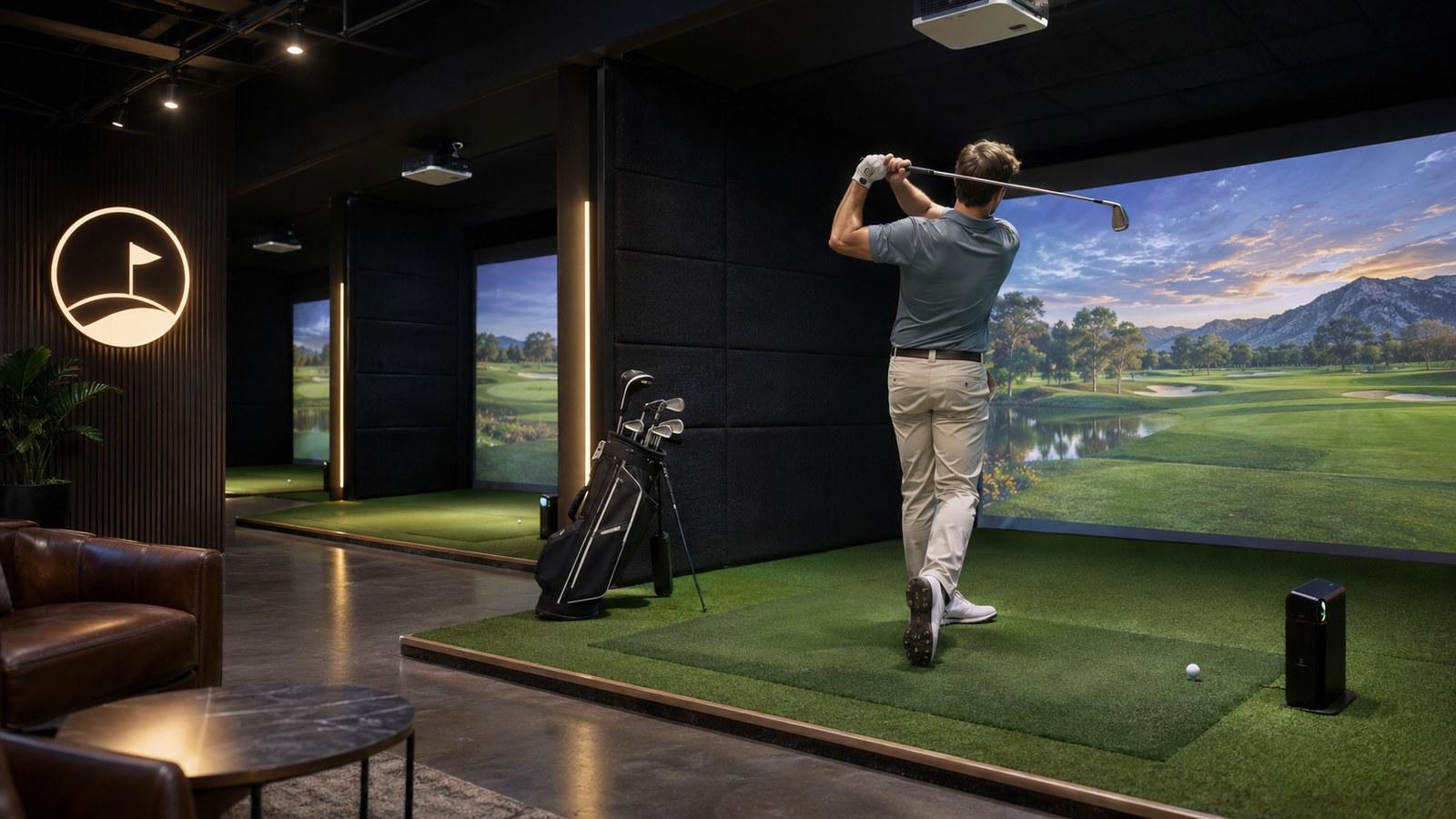
Back Nine's development chief lays out 5 keys to its no-employee model
Darren Wilstead tells the Franchise Champion Show how The Back Nine runs 24/7 indoor golf studios with no staff on site, and what its strongest franchisees do differently.
By The Perfect Lie Golf Desk / 1 source / Published November 15, 2026
The Back Nine sells franchises for indoor golf studios that run around the clock with no employees on site. Darren Wilstead, the company's chief development officer, explained how that works in a February episode of Athlete to Owner's Franchise Champion Show, hosted by franchise coach Alan Regala. We already heard from two Back Nine owners in Henderson, Nevada. This episode is the franchisor's view: how the doors open, how long a build takes and who tends to succeed.
- YouTube
Athlete to Owner: The "No Employee" Franchise Model?
Read source ↗ The growth figures below come from the Feb. 17 video and may have moved since. Regala's intro says The Back Nine had 15 locations in 2023 and now has 140 open with more than 300 in the pipeline, after signing 312 franchises the year before. Wilstead, a former Zimmer Biomet sales rep, says there were 12 locations when he joined in 2023 and that the company sold its 440th location on the day they recorded. He adds that it had already closed 40 deals that year, in February.
1. Software does the front desk
Members book a tee time online or in The Back Nine's app. They then get a text and an email with a link that opens the door 15 minutes before the booking and stops working when it ends. Members can hold one booking at a time, or two on the top membership, and can book again as soon as a session ends. Wilstead says there is no weekend surcharge. Golfers switch the simulator on and off themselves.
Free to play
Make your call with Beat Chuck
Check the challenge board for the latest open games.
All Beat Chuck games →
2. It's built for golfers, not date night
The founder is a scratch golfer and attorney who wanted to play more at night, Wilstead says, so the studios are meant for practice and competitive play. Members come in at 4 a.m. or at midnight. There are no servers bringing food and drinks. Wilstead says the number of golfers playing both indoor and outdoor golf is up 65% over two years.
3. About seven months to open
Wilstead puts the time from signing to opening at about seven months, with the lease as the biggest holdup. A project management team handles the site and checks that the Full Swing simulators fit. A customer success manager helps set up the website, membership options and sales plan, then stays with the owner for six months after opening.
4. Three or four bays in Class B retail
Most locations have three or four bays in Class B retail space. Wilstead budgets 700 to 800 square feet per bay, counting seating, common areas and bathrooms. That works out to about 2,000 to 2,400 square feet for three bays and 2,700 to 3,200 for four.
5. Most owners keep their day jobs
Wilstead says he could count the full-time owners on one hand. Everyone else has another job. He doesn't call it hands-off, though. With the software running operations, the owner's real job is selling memberships and corporate deals.
What the top 20% do
Wilstead names three habits. The best owners follow the franchise playbook, and he says military veterans are good at that. They spend money on local marketing. They work their local community, from offering a free hour to a stranger in a Titleist hat to selling memberships to nearby businesses. One owner sold naming rights to a bay for $300 a month, he says. Studios also sell ads on a dedicated TV and logos on range balls.
Outside the U.S., The Back Nine has hired country managers in Canada, the United Kingdom and Australia. Wilstead says those teams work separately so the expansion doesn't pull support from U.S. owners.
The episode gives no franchise fees, startup costs or unit revenue. Anyone weighing a studio will need The Back Nine's franchise disclosure documents for those numbers.