Landon Ashworth starts his putting rebuild by testing where his hands sit
His grip-height rehearsal offers a specific feel to try; PGA coaching adds a way to judge the putts that follow.
By The Perfect Lie / 1 source / Published October 18, 2026
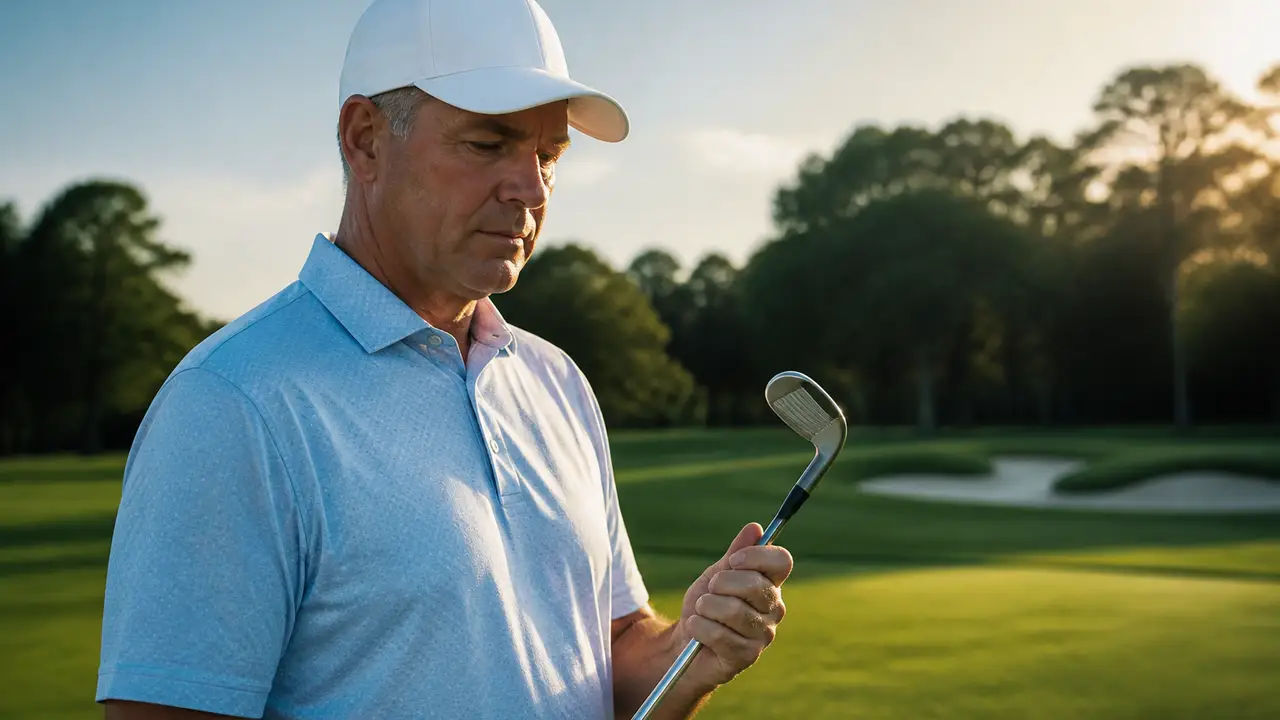
Landon Ashworth starts his putting lesson by moving his hands a little farther down the grip. Before rolling a ball, he gently moves the putter back and forth, looking for the position where the head feels most stable in his hands.
That small adjustment is the center of his October 15 putting video. Ashworth presents a personal routine for rebuilding his game. He also says he is not a PGA-certified coach and describes the routine as his own approach.
- YouTube
Putting from scratch
Read source ↗ Find the position before rehearsing the stroke
Ashworth demonstrates an overlapping hand position, then slides his hands along the handle in small increments. He says a change of roughly half an inch can alter how stable the putter feels. His test is subjective: he watches and feels the head move while making a small rehearsal motion.
Free to play
Make your call with Beat Chuck
Check the challenge board for the latest open games.
All Beat Chuck games →
He then turns to the stroke, describing a feeling of closing his right armpit toward the target and presenting it again as the putter moves through. He favors allowing the toe to release. He repeatedly describes those motions as what works for him.
The video gives viewers a clear sequence to inspect: establish the connection to the club, repeat it, then rehearse the motion. It does not compare results across different golfers or demonstrate that his chosen grip produces better start lines than other styles.
Test a grip against the putts it produces
PGA of America guidance offers a useful way to put a grip experiment on the practice green. Its five-step exercise begins with a fairly straight, flat 10-foot putt. After warming up, golfers hit three putts with each hand separately and assess whether either hand feels unstable or takes over.
The PGA suggests trying another grip when that imbalance appears, including a saw or claw style to quiet a dominant hand. That advice gives those alternatives a place in the experiment, even though Ashworth dismisses them in his own lesson.
PGA professional Keith Stewart makes a related point in a separate lesson on a lead-hand-low grip: diagnose the problem before changing the connection. He identifies short misses, poor distance control and a loose, wristy stroke as reasons to explore the option. He also advises changing hand position while maintaining the putting posture, helping isolate what changed.
Ashworth’s routine offers a specific feel to try. The PGA exercises supply a way to judge the result: keep the test putt consistent, observe the hands and compare the rolls before deciding which connection to practice.

More from The Perfect Lie